Chitwan National Park: A Visitor's Guide
Nepal's first national park and a UNESCO World Heritage Site: wildlife, zones, permits, safety and how to plan your safaris.
Updated 4 October 2026
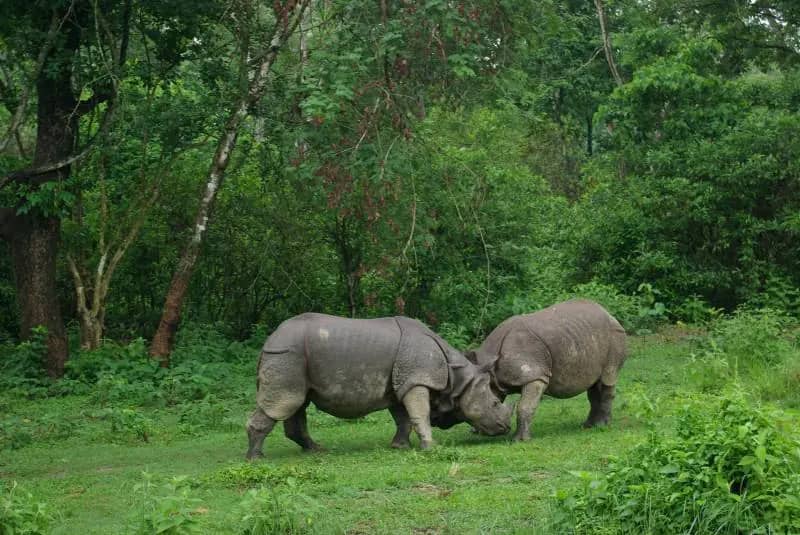
Chitwan National Park was established in 1973 as Nepal's first national park and became a UNESCO World Heritage Site in 1984. It protects 952 km² of sal forest, riverine forest and tall grassland in the lowland Terai, plus a buffer zone of community forests around it.
Wildlife you can see
- Greater one-horned rhinoceros – more than 750 live in the park
- Royal Bengal tiger – around 130, among the highest densities in Asia
- Asian elephant, gaur (Indian bison), sloth bear and leopard
- Four kinds of deer: spotted, sambar, barking and hog deer
- Mugger crocodile and the critically endangered gharial
- More than 540 species of birds, including hornbills and the Bengal florican
How to explore the park
- Jeep safari: covers the most ground; half or full day
- Canoe ride: the gentlest way to see crocodiles and river birds
- Jungle walk: the most exciting, always with two guides
- Bird watching: best from November to April
Permits and rules
Every visitor needs a park entry permit, which we arrange with your activity. Stay with your licensed guide at all times, keep your voice low, wear neutral colours and never feed or approach animals. Drones are not allowed without special permission.
Opening times and seasons
The park is open all year, but some areas close during the monsoon (roughly July to August) when tracks flood. Read our guide to the best time to visit Chitwan.
Conservation
Chitwan's rhino and tiger numbers have recovered thanks to strong protection and community forests that share park income with local people. Choosing licensed guides and ethical activities supports that work – see responsible travel.